

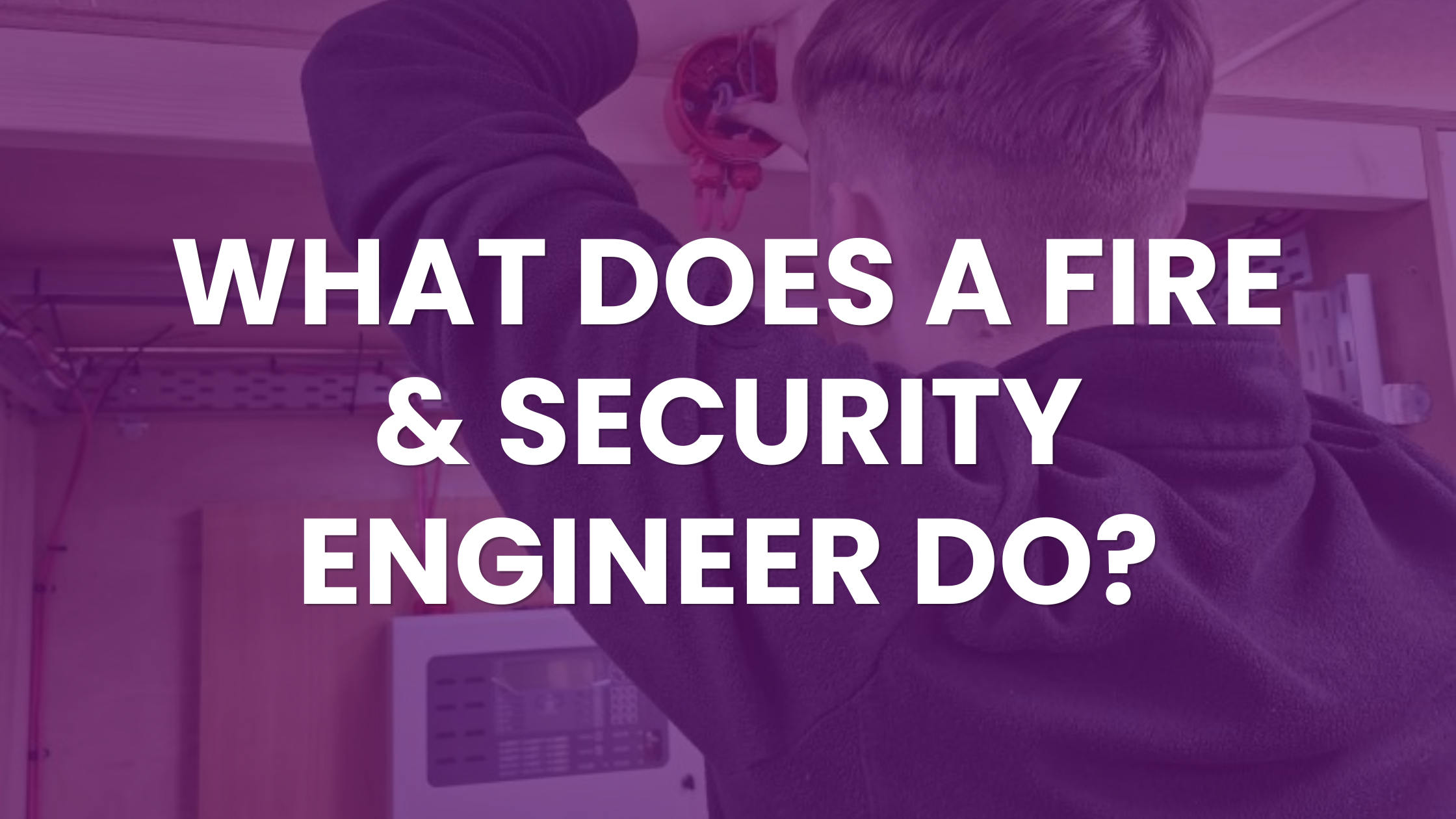
If you’ve ever wondered what a fire & security engineer actually does, you’re not alone. It’s one of the most important jobs in the built environment, but many people don’t realise just how varied and rewarding it can be.
From installing fire alarm systems in schools to maintaining CCTV in hospitals and programming access control systems in office buildings, fire and security engineers help protect people, property and businesses every single day.
Whether you’re considering an engineering career, looking into apprenticeships or simply curious about the role, this guide explains exactly what a fire & security engineer does, the skills you’ll need and what a typical day looks like.
What Is a Fire & Security Engineer?
A fire & security engineer installs, services, maintains and repairs the systems that keep buildings safe and secure. These systems include:
- Fire alarm systems
- CCTV
- Intruder alarms
- Access control
- Emergency lighting
- Door entry systems
- Smoke detection systems
- Integrated security systems
Some engineers work across all of these systems, while others choose to specialise. For example, a fire alarm engineer focuses primarily on fire detection and alarm systems, while a security systems engineer may spend more time installing and maintaining CCTV, intruder alarms and access control solutions.
No matter the specialism, every engineer plays an essential role in protecting lives and ensuring buildings comply with safety regulations.
What Does a Typical Day Look Like?
One of the biggest attractions of becoming a fire & security engineer is that no two days are the same. A typical day could involve:
- Travelling to customer sites
- Installing new fire and security systems
- Testing equipment to ensure it’s working correctly
- Carrying out planned maintenance
- Diagnosing faults
- Repairing damaged equipment
- Updating software and system settings
- Completing digital service reports
- Speaking with customers about system performance
- Working alongside electricians, builders and project managers
Some engineers spend most of their time installing brand-new systems, while others focus on servicing existing equipment or responding to emergency call-outs.

Where Do Fire & Security Engineers Work?
Fire and security systems are needed in almost every type of building, meaning engineers work in a wide variety of locations. You could find yourself working in:
- Schools and colleges
- Hospitals
- Offices
- Retail stores
- Warehouses
- Apartment buildings
- Hotels
- Factories
- Leisure centres
- Industrial sites
Every site presents different challenges, keeping the work interesting and helping engineers build a broad range of technical skills.
What Are the Daily Responsibilities?
The daily responsibilities of a fire & security engineer depend on the type of role and employer, but commonly include:
Installing systems
Engineers install equipment such as fire alarm panels, smoke detectors, CCTV cameras and access control readers. This involves reading technical drawings, running cables and ensuring systems meet industry standards.
Testing equipment
Before any system goes live, engineers carry out detailed testing to make sure everything operates correctly and safely.
Fault finding
When a customer reports a problem, engineers investigate the cause, diagnose faults and repair or replace damaged components.
Planned maintenance
Many systems require regular servicing to remain reliable and compliant. Engineers inspect equipment, carry out preventative maintenance and keep detailed service records.
Customer support
Fire & security engineers regularly explain how systems work, answer customer questions and provide advice on maintaining equipment.
What Skills Does a Fire & Security Engineer Need?
You don’t need years of experience before starting your career, but successful engineers often share similar qualities. These include:
- Problem-solving skills
- Good communication
- Attention to detail
- Practical ability
- A willingness to learn
- An interest in technology
- Organisation
- Teamwork
As technology continues to evolve, engineers also need to be comfortable learning about new products, software and smart building technologies.

Is It a Good Engineering Career?
If you’re looking for an engineering career that’s practical, varied and offers excellent progression, becoming a fire & security engineer is an excellent choice.
Every building relies on fire and security systems to protect people and property. As buildings become smarter and regulations continue to evolve, skilled engineers remain in high demand.
EngineeringUK reports that more than 102,000 engineering and technology apprenticeship starts were recorded in England during 2024/25, accounting for 29% of all apprenticeship starts. This demonstrates the growing demand for skilled professionals across engineering industries.
Unlike many careers, you’ll also have the opportunity to see the results of your work every day, knowing you’ve helped create safer environments for the people who use those buildings.
How Do You Become a Fire & Security Engineer?
One of the most popular routes into the industry is through a Fire, Emergency and Security Systems (FESS) Apprenticeship.
A Level 3 apprenticeship allows you to:
- Earn a salary while training
- Gain nationally recognised qualifications
- Learn from experienced engineers
- Develop practical skills on real customer sites
- Build confidence in the workplace
Rather than spending years in a classroom, apprentices learn by doing, combining hands-on experience with structured training.
For many employers, apprenticeships are the preferred route because they produce engineers with both technical knowledge and practical experience.
Career Progression Opportunities
Qualifying as a fire & security engineer is just the beginning. As your experience grows, you could progress into roles such as:
- Fire Alarm Engineer
- Security Systems Engineer
- Installation Engineer
- Service Engineer
- Commissioning Engineer
- Project Engineer
- Design Engineer
- Contracts Manager
- Technical Support Engineer
- Operations Manager
Many engineers also complete additional manufacturer training and specialist qualifications throughout their careers.

Is This Career Right for You?
You might enjoy becoming a fire & security engineer if you:
- Enjoy solving problems
- Like practical, hands-on work
- Prefer variety over sitting at a desk all day
- Enjoy working with technology
- Want a career with long-term opportunities
- Like working with people
- Want to make a real difference by helping keep buildings safe
It’s a career that combines technical knowledge with practical skills, making every day different and rewarding.
Start Your Career with Elevation Academy
If becoming a fire & security engineer sounds like the right career for you, an apprenticeship is one of the best ways to get started.
At Elevation Academy, we help apprentices develop the skills, knowledge and confidence needed to succeed in the fire and security industry. Through our Level 3 Fire, Emergency & Security Systems Apprenticeship, you’ll earn while you learn, gain nationally recognised qualifications and work alongside experienced professionals.
Whether you’re leaving school, changing careers or looking for a new challenge, we’re here to help you take the first step.
Ready to start your engineering career?
Explore our Fire, Emergency & Security Systems Apprenticeship or contact the Elevation Academy team to find out how you can begin your journey towards becoming a qualified fire & security engineer.