

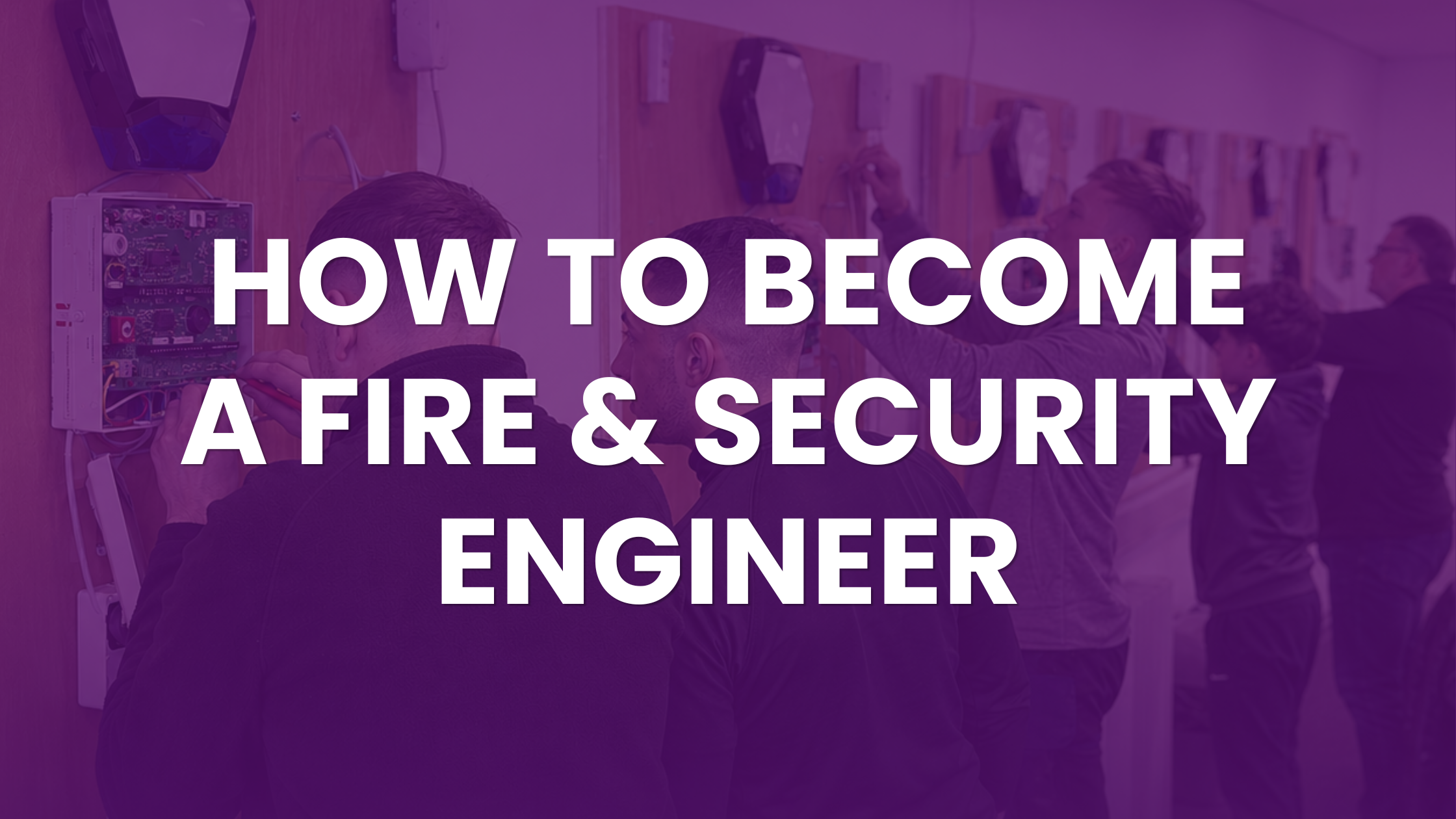
If you’re looking for a career that’s practical, varied and offers real opportunities to grow, becoming a fire & security engineer could be the perfect choice.
It’s a career where no two days are the same. One day you might be installing fire alarm systems in a new school, and the next you could be maintaining CCTV and access control systems in a hospital or office building. Every project plays an important role in helping to keep people, buildings and businesses safe.
The best part? You don’t necessarily need a university degree to get started.
In this guide, we’ll explain how to become a fire & security engineer, what the job involves, the skills you’ll need and why a fire & security apprenticeship is one of the best routes into this rewarding industry.
What Is a Fire & Security Engineer?
A fire & security engineer installs, maintains, services and repairs systems that protect people and property. Depending on your employer, you could work with:
- Fire alarm systems
- CCTV systems
- Intruder alarms
- Access control systems
- Emergency lighting
- Door entry systems
- Smoke detection and life safety systems
Some engineers specialise in one area, such as becoming a fire alarm engineer, while others work across several different systems as a multi-skilled security engineer.
As technology continues to develop, today’s engineers also work with smart building technology, cloud-connected systems and integrated security solutions.
What Does a Typical Day Look Like?
One of the biggest reasons people enjoy this career is the variety. A typical day might include:
- Installing new fire alarm systems
- Testing equipment to make sure it’s working correctly
- Carrying out routine maintenance
- Diagnosing and fixing faults
- Meeting customers on site
- Reading technical drawings
- Completing digital reports and paperwork
- Working alongside electricians, builders and project managers
Some roles involve travelling to different customer sites each day, while others focus on larger projects over several weeks.

What Qualifications Do You Need?
Many people assume you need years of experience before becoming a fire & security engineer, but that’s not the case.
One of the most popular routes into the industry is through a fire & security apprenticeship.
A Level 3 Fire, Emergency and Security Systems apprenticeship combines paid employment with structured training, allowing you to earn while you learn. You’ll spend most of your time working alongside experienced engineers while developing your technical knowledge through regular training.
Unlike university, there are no tuition fees, and you’ll gain valuable workplace experience from day one. Apprentices are employed, receive a salary and build practical skills that employers are actively looking for.
What Skills Do Fire & Security Engineers Need?
You don’t need to know everything before you start. That’s exactly what your apprenticeship is designed to teach. However, successful engineers usually have:
- Good problem-solving skills
- A practical approach to work
- An interest in technology
- Good communication skills
- Attention to detail
- A willingness to learn
- The ability to work independently and as part of a team
You’ll also need to be reliable, organised and committed to working safely.
Is a Fire & Security Apprenticeship Worth It?
Absolutely! If you’re wondering how to become a fire & security engineer, an apprenticeship is often considered the best starting point because you gain both qualifications and real-world experience at the same time.
Benefits include:
- Earn a salary while training
- No student debt
- Learn from experienced engineers
- Gain nationally recognised qualifications
- Build confidence on real projects
- Develop practical skills employers value
- Start your career straight away
Employers across the UK continue to invest in apprentices because they help develop skilled engineers who understand both the technical and practical side of the industry.

How Long Does It Take?
Most Level 3 fire & security apprenticeships take around three years to complete. During this time you’ll develop your knowledge of:
- Fire detection systems
- Security systems
- Electrical principles
- Installation techniques
- Fault finding
- Maintenance
- Health and safety
- Industry standards
- Customer service
By the end of your apprenticeship, you’ll have the skills needed to work confidently as a qualified fire & security engineer.
What Career Progression Is Available?
One of the best things about engineering careers is that there are plenty of opportunities to progress. After qualifying, you could become a:
- Fire Alarm Engineer
- Security Engineer
- Service Engineer
- Installation Engineer
- Commissioning Engineer
- Project Engineer
- Technical Support Engineer
- Design Engineer
- Contracts Manager
- Operations Manager
Many experienced engineers also move into training, surveying or specialist compliance roles later in their careers.
As you gain experience and additional qualifications, your responsibilities and earning potential can continue to grow.
Why Fire & Security Engineers Are in High Demand
The demand for skilled engineers continues to grow across the UK. Every commercial building, school, hospital, warehouse, apartment block and office needs fire and security systems that are installed and maintained correctly.
At the same time, advances in technology mean modern systems are becoming increasingly sophisticated, creating demand for engineers with up-to-date technical skills.
With many experienced engineers reaching retirement age and new buildings being developed across the country, employers are actively looking for the next generation of talented engineers.
According to EngineeringUK, more than 102,000 engineering and technology apprenticeship starts were recorded in England in 2024/25, accounting for 29% of all apprenticeship starts. Engineering and technology apprenticeships also increased by 5% compared with the previous year, highlighting growing demand for skilled professionals.
There has never been a better time to start a career in engineering!

Why Choose Elevation Academy?
Choosing the right training provider can make a huge difference to your career.
At Elevation Academy, apprentices don’t just gain a qualification, they develop the practical knowledge, confidence and professional behaviours needed to succeed in the workplace.
Training is delivered by experienced industry professionals who understand what employers expect. Learners benefit from hands-on practical sessions, small class sizes and ongoing support throughout their apprenticeship, while continuing to gain valuable experience with their employer.
Whether you’re leaving school, changing careers or already employed and looking to develop your skills, a fire & security apprenticeship with Elevation Academy provides an excellent foundation for a long-term engineering career.
Frequently Asked Questions
Can I become a fire & security engineer without going to university?
Yes. In fact, many engineers enter the industry through an apprenticeship, where they earn a salary while gaining practical experience and nationally recognised qualifications.
Is being a fire alarm engineer a good career?
Yes. Fire alarm engineers play an essential role in protecting lives and buildings. The work is varied, practical and offers excellent opportunities for career progression.
What GCSEs do I need?
Requirements vary between employers, but you’ll usually be expected to have GCSEs in English and Maths, along with a genuine interest in engineering and technology.
Is the work physical?
Some aspects of the job involve lifting equipment, working at height or travelling between sites, so being comfortable with practical work is important.
Ready to Start Your Career as a Fire & Security Engineer?
If you’re excited about a career that’s hands-on, rewarding and full of opportunities, there’s no better time to get started.
At Elevation Academy, we work with learners across the UK to help them begin successful careers in the fire and security industry through our Level 3 Fire, Emergency & Security Systems Apprenticeship. You’ll earn while you learn, gain industry-recognised qualifications and develop the practical skills employers are looking for.
Whether you’re leaving school, finishing college or looking for a new direction, our experienced team is here to guide you every step of the way.
Visit our Become an Apprentice page to find out more, or contact the Elevation Academy team and we’ll be happy to answer your questions and help you start your career.